Wallet Wings

Tips, tricks, and strategies for saving and earning more money!

Hello, my name is Brian Hills and welcome to my blog! I’m an energy industry professional and a personal finance writer. I hold a Bachelors Degree in Finance and currently work in Procurement for a Fortune 500 company. You can read my thoughts about money and personal finance on this blog, Wallet Wings. I hope you enjoy!

  • My Favorite Smartphone App for Saving and Investing

    Thanks to the high tech smartphones in our pockets, there are so many great apps available for saving and investing money. Whether you use an Apple phone or an Android phone, these devices can really improve your personal finances. There are smartphone apps available which can be used for banking, stock investing, crypto investing, stock option trading, futures trading, and more. Some apps even provide all of these services! Fortunately, many of these apps are simple and intuitive to operate for even the most basic user.

    Currently, my favorite personal finance smartphone app is called Robinhood. The Robinhood app is like a financial swiss army knife in your pocket. This app allows you to buy stocks, ETFs, options, crypto, futures, and wager on prediction markets. Robinhood changed the investing game when it entered the market in 2013 by offering retail investors commission free trading. At that time, most of the brokerages were charging between $5-$10 per trade! Those fees added up quickly hurting small and large retail investors portfolios. Thankfully, when Robinhood started becoming popular, the other brokerages copied Robinhood’s offering of commission free trading as well. Now, nearly all of the major brokerages offer commission free trading, so I would like to tip my hat to Robinhood for bringing this benefit to the market!

    These days, Robinhood’s business and product suite have grown substantially. Robinhood is no longer a small startup company and their business is currently worth just over $100 billion. Robinhood now even offers credit cards and mortgages (mortgages are offered through a partner company). Additionally, if you sign up for Robinhood Gold, which costs $5 per month or $50 annually, subscribers receive 3.5% interest annually on their idle cash. This rate is much better than the rate that I receive in my bank account so it is definitely an attractive offer. This interest rate does fluctuate throughout the year based on borrowing and lending rates typically influenced by the Federal Reserve. In early 2025, the interest rate that I was receiving on my cash was 4%, but the Fed has been lowering interest rates this year which has impacted the rate that Robinhood can pay to its customers. The other great thing about the cash that you store on Robinhood is it is FDIC insured up up to $2.5 million dollars “at partner banks.” This gives me that warm and fuzzy feeling that my money is safe sitting in my Robinhood brokerage account!

    Here is a quick and shameless referral pitch from me. If you sign up for Robinhood using my referral link here: https://join.robinhood.com/brianh850 we can both receive a stock valued from $5-$200.

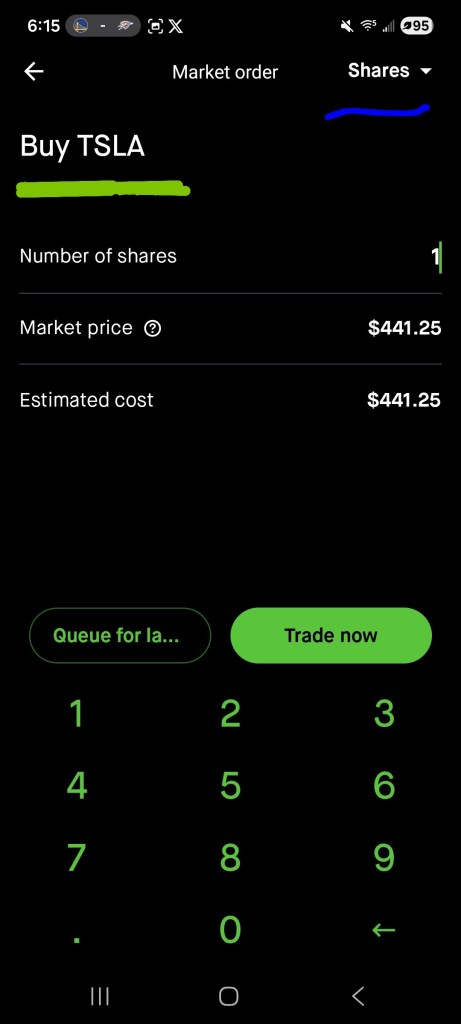
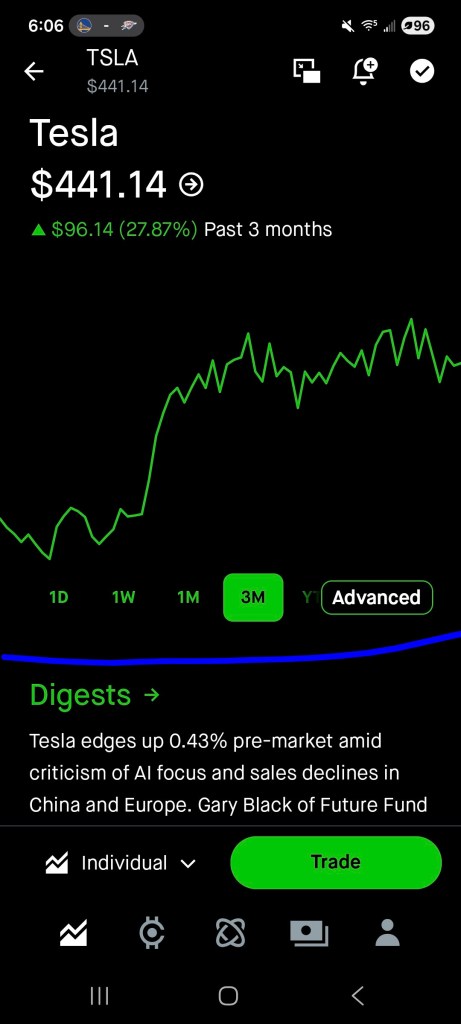
    As mentioned above, you can also buy individual stocks and ETFs through the Robinhood app. The app makes it super easy to buy and sell investments. I personally utilize Robinhood as my brokerage account to help me execute investments and trade ideas on the go. Maybe I am reading an article on CNBC about an interesting stock, ETF, or IPO that I want to make an investment in. After performing some research, I log into the Robinhood app and execute a purchase. Below is a screenshot of what the Robinhood app looks like on an Android phone (Apple will look very similar). In the screenshot, I am viewing Tesla stock, ticker symbol TSLA, which is trading at $441.14 per share on November 12, 2025. I am viewing the 3 month chart and I can easily switch chart timeframes using the timeframe selections that I underlined in blue.

    If I was ready to purchase Tesla stock I would perform the following:

    1. Tap the “Trade” button
    2. Select “Buy”
    3. Input the number of shares that I want to purchase and select “Trade Now” (Note: by tapping where it says “Shares” I can customize my order further)
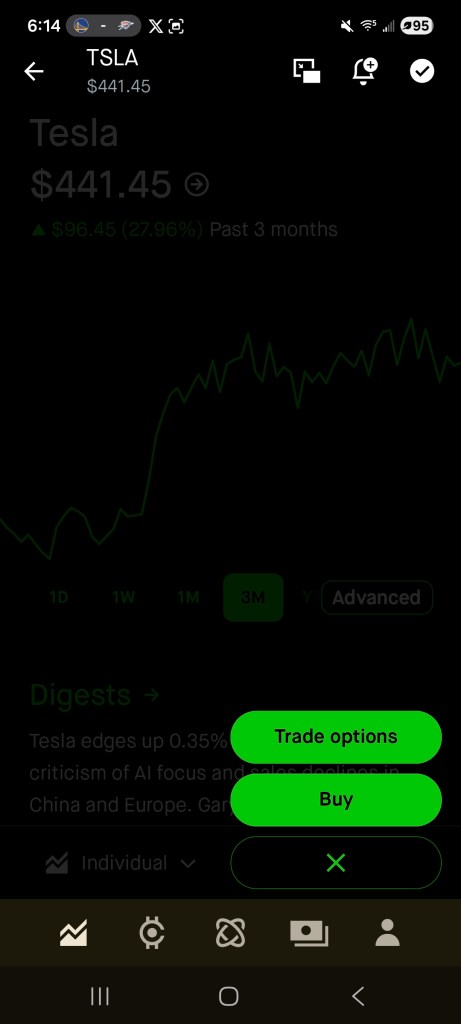
    You can see how simple that was to buy a stock on the Robinhood app, which is why the company currently has 26 million customers. If you prefer not to make your investments using your smartphone, Robinhood also allows you to buy and sell investments on your desktop or laptop computer. See the screenshots below to view how the website interface looks when buying Tesla on a desktop computer:
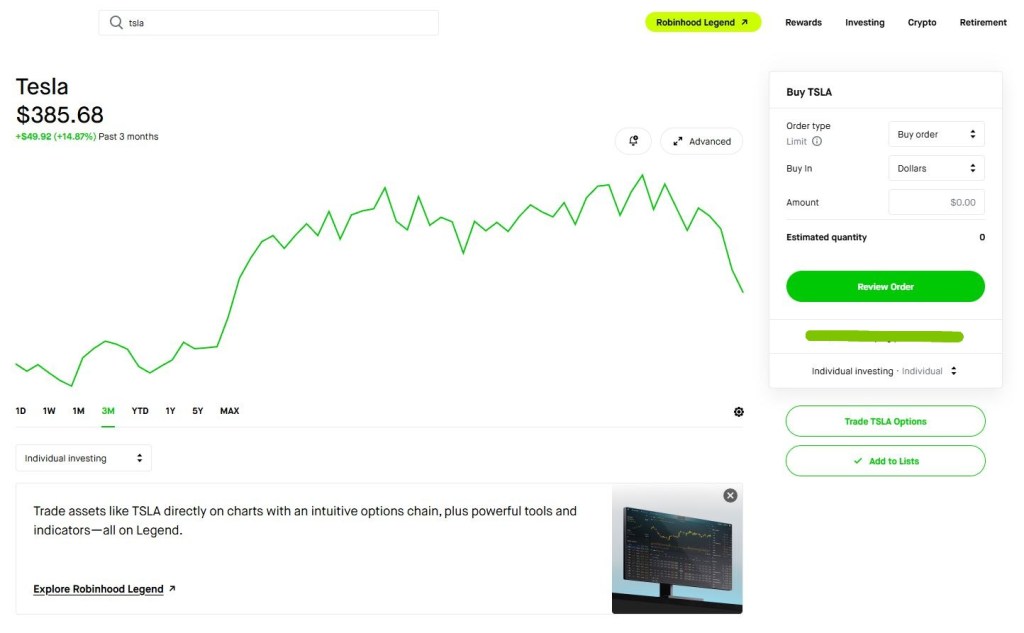
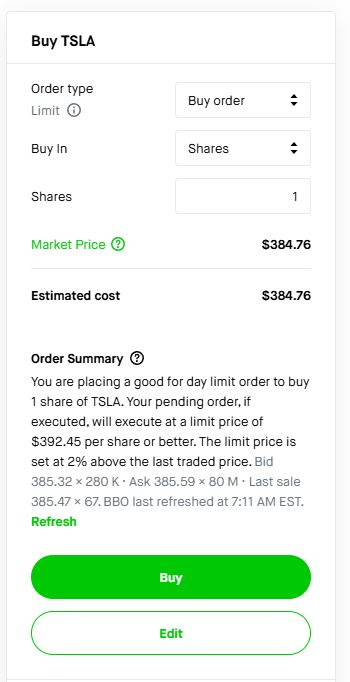
    As you can see, the desktop app looks slightly different from the smartphone app and it gives you a larger screen to work with. Regardless, whether you are investing from a smartphone or via a computer, the process is simple and intuitive.

    In addition to investing in stocks, over the last two years I have been utilizing trading call and put options in my Robinhood account as a more speculative strategy. I have seen some decent success with trading stock options, so I am continuing to experiment with them further. Essentially a stock option gives you the right, but not an obligation, to buy or sell a stock at a specific price. You pay a premium for this right, but the percentage moves on options are much larger than just buying a singular stock. For example, a stock price may move up 10% in a day while the stock option may move up 40%. There are more advanced option strategies than simply buying call or put options. For the time being, I am sticking with what I know. It can be easy to make or lose a lot of money while trading options, but you must weigh that risk with your investment strategy and money goals.

    Now, let’s talk a little bit about crypto trading and investing. As mentioned earlier, Robinhood does allow you to buy and sell select cryptocurrencies. At the moment, Robinhood has a much more limited crypto menu when compared to some of the other pure play crypto exchanges like Coinbase. That can be a good or a bad thing depending on your needs. If you’re a crypto guru, you may want to look into using a crypto only exchange. If you are a novice to moderate crypto investor, Robinhood should have enough options. As of today, November 12, 2025, Robinhood currently allows for the buying and selling of 45 different cryptocurrencies. Below is a list of some of the more popular cryptocurrencies available for trading on Robinhood:

    • Uniswap
    • Solana
    • Avalanche
    • Bitcoin
    • Cardano
    • Dogecoin
    • Binance Coin
    • Ethereum
    • Ripple or XRP
    • Chainlink
    • Hyperliquid
    • Aster
    • Litecoin
    • Arbitrum
    • Official Trump
    • USDC
    • World Liberty Financial

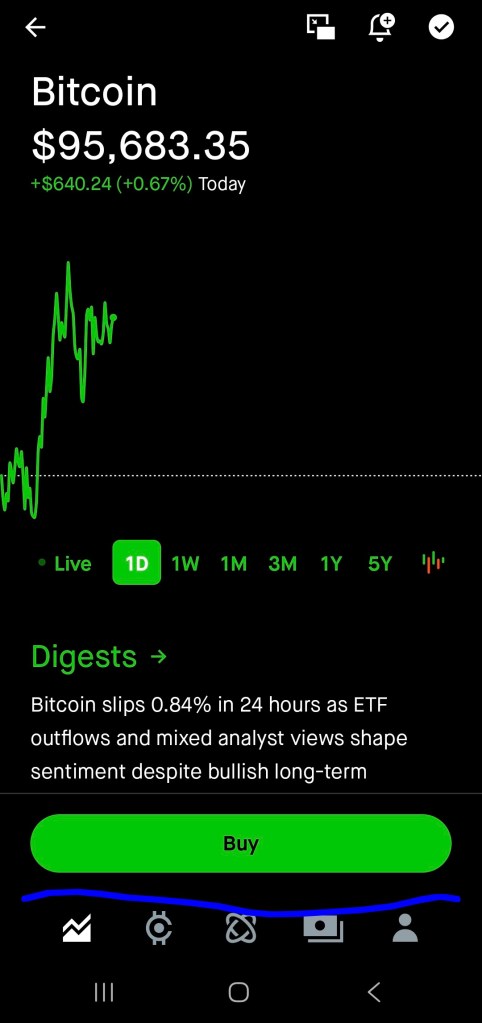
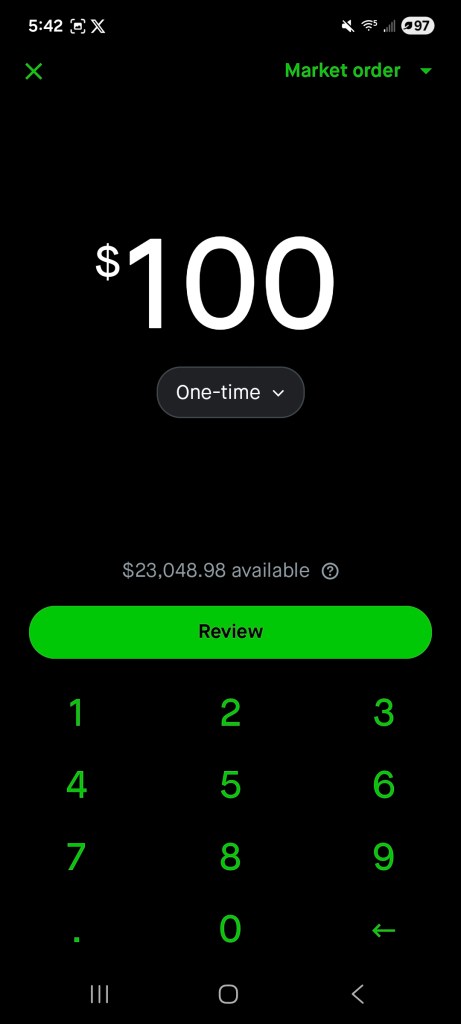
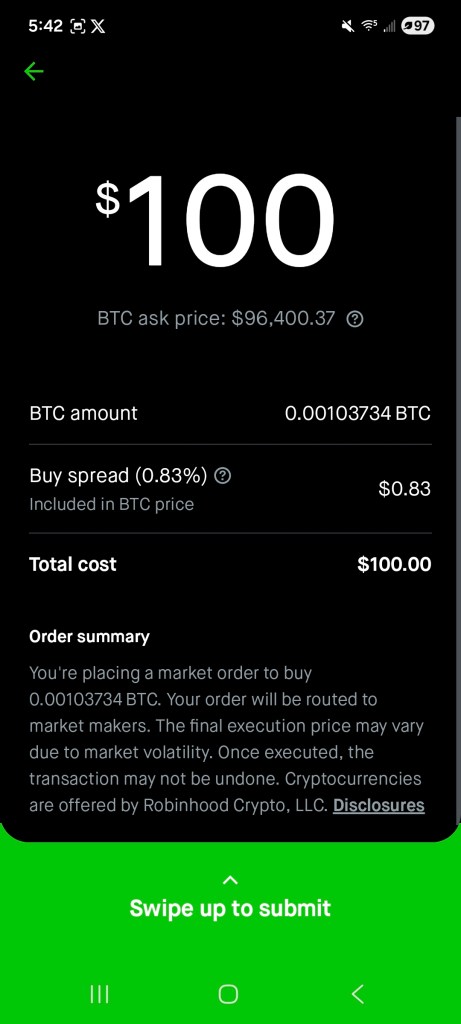
    Buying or selling crypto on Robinhood is as simple as buying or selling stocks. Below is an example of buying Bitcoin via an Android phone using the Robinhood app:

    1. Tap the “Buy” button
    2. Input the dollar amount or number of Bitcoins (or fractions) that I want to buy and select “Review”
    3. “Swipe up to submit” order

    Quick and easy process!

    Another crypto feature to note, in many states Robinhood allows staking with Ethereum and Solana. This means that by helping secure the network, just by clicking “Stake” on your crypto holdings, you can receive a small yield on your crypto. Presently, if you stake Ethereum, you earn 2.09% annually and staking Solana yields 4.60% annually. Staking can be a helpful tool to earn passive yield if you are a long term holder of a specific cryptocurrency. It looks like Robinhood might roll out staking to more cryptocurrencies in the future, so be on the lookout for that.

    The last high powered investing feature that I want to mention is Robinhood’s current IRA match offer. If you open an IRA with Robinhood, they will match your annual contributions up to 3% if you are a Robinhood Gold subscriber and up to 1% if you are a non Gold subscriber. This is huge if you are a small business owner, freelancer, or if you work for a company that does not offer a retirement matching program. Retirement matching programs can help you grow your money quicker and Robinhood is helping a lot of investors with this feature.

    As you can see, Robinhood is certainly a powerful and innovative personal finance app. I have been a happy Robinhood customer since 2017 and it has been great to watch them grow as a company. Robinhood seems to always be looking for new ways to improve their product offerings and satisfy their customers. This is why I crowned them “My Favorite Smartphone App for Saving and Investing.” Well done Robinhood team, please continue to “Democratize Finance” for us all!

    If you sign up for Robinhood using my referral link here: https://join.robinhood.com/brianh850 we can both receive a stock valued from $5-$200.
  • I Just Paid $300 to Cover my Wireless Phone Bill for the Whole Year

    One money saving tip that you may not be aware of are prepaid wireless phone plans. With a prepaid plan, there is no contract unless you are paying for your phone in installments as opposed to outright. With a prepaid plan, you prepay for your wireless service monthly or for several months or even a year at a time. Oftentimes the more months that you are willing to prepay, the lower your total cost will be. Hence, why I just prepaid for an entire year of service! By doing this, I received about a 40% discount on my prepaid plan. By prepaying my plan for the full year, the cost of the plan averages out to $25 per month. Not bad right??

    Now the traditional cell phone/wireless plan is called a contract or postpaid plan. This type of plan locks you into a contract with your wireless provider for a two or three year term. Each month your provider will send you a bill to pay an amount based on the plan that you have selected and any overages incurred. Postpaid plans are normally the pricier option versus a prepaid phone plan. Many people are paying between $80-100+ per month per line on a postpaid plan. If you are on a family plan, that price usually goes down some since you receive a discount for having multiple lines.

    In the USA, prepaid plans are not quite as popular as postpaid plans. However, they are a nice option, especially if you are watching your budget. Also, prepaid plans are becoming more popular due to their attractive pricing, availability, and flexibility.

    Below is a list of some of the larger low cost prepaid wireless providers:

    • Mint Mobile
    • Visible
    • AT&T
    • PureTalk
    • T-Mobile
    • Straight Talk
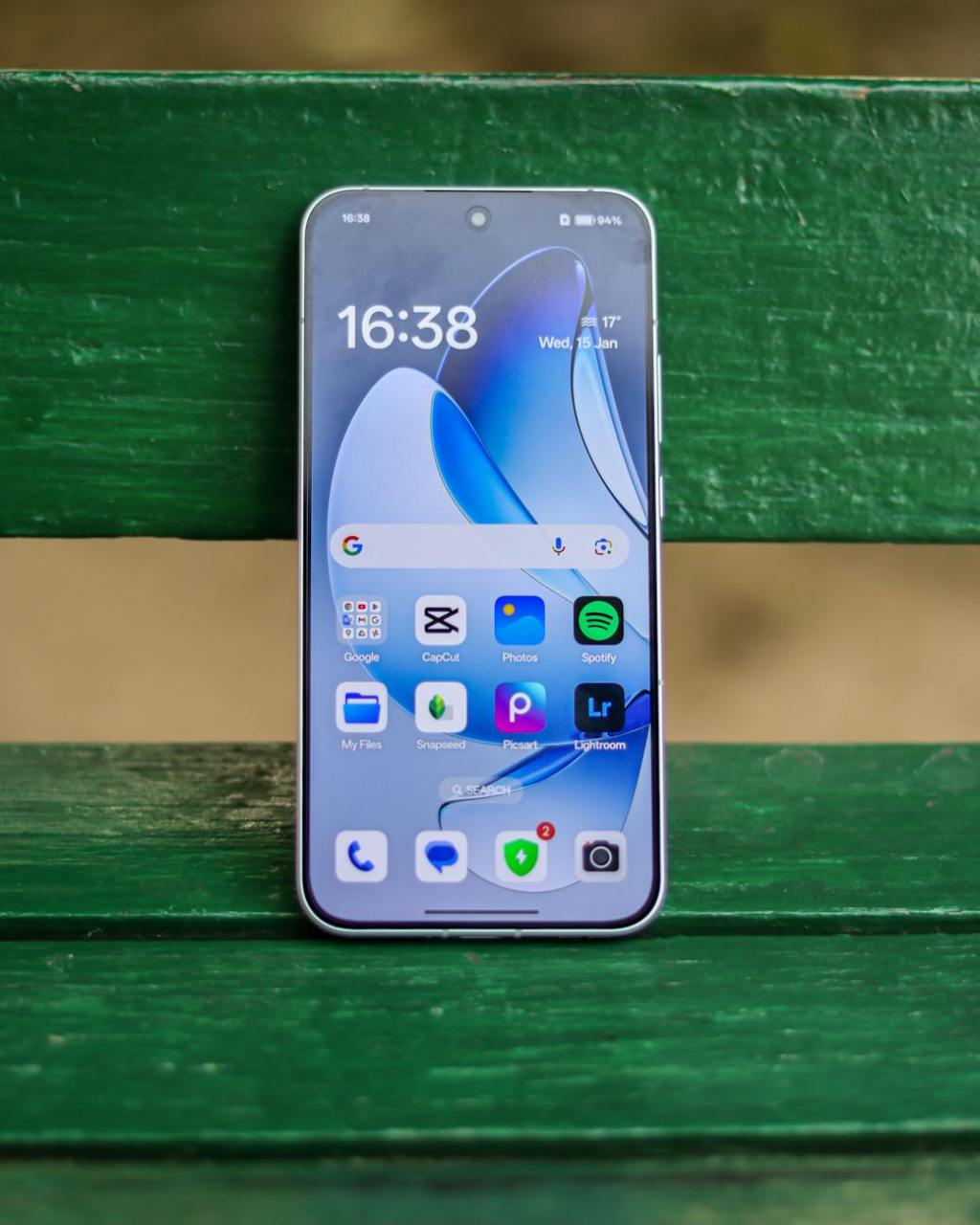
    Photo by Tyler Lastovich on Pexels.com

    Let’s further discuss some of the advantages and disadvantages of buying a prepaid wireless plan.

    Advantage #1 COST. As detailed above, you can see how much lower the cost of a prepaid plan is especially if you are on an individual plan. Many people will see an up to 50% monthly cost savings by moving to prepaid.

    Advantage #2 FLEXIBILITY. If you bring your own phone or buy a phone for retail price, you will not be tied to a contract. Additionally, there are some Android smartphones that cost between $200-$400 at retail price. Many of these are quality smartphones priced reasonably for those that don’t require an iPhone. When you are on a prepaid phone plan, if you decide that you want to move to another wireless carrier, go ahead, you are free as a bird!

    Advantage #3 TAXES AND FEES. This ties back into cost, but prepaid or no contract plans typically have lower taxes and fees associated with them. I only had to pay $3 in taxes and fees when I purchased my whole year of prepaid wireless service. A postpaid plan will normally have higher taxes and fees added to your monthly bill. Taxes and fees on a postpaid plan can range from 15-25% of your bill. That is significantly more expensive and must be taken into consideration when signing up for a wireless phone plan.

    Advantage #4 OVERAGE FEES. Since you are prepaying for your phone service, there is typically no way to receive “overage” charges like there is on a postpaid plan. If you use up all of your data, the prepaid carriers will typically just slow down your internet speeds or shut your internet off. On a postpaid plan, they will charge you for overages and you will receive a nice extra charge on your monthly bill. Little and sometimes big fees/charges can be tacked on to your monthly bill with a postpaid plan. These surprise fees won’t show up on a prepaid plan.

    Disadvantage #1 WIRELESS COVERAGE. The wireless coverage on a prepaid plan might not be quite as extensive as a postpaid plan. Many of these prepaid plans run on major carrier networks, but wireless service may be slightly less broad or deprioritized when compared to a postpaid plan. I personally have very good coverage on my prepaid plan so I haven’t experienced that issue. However, all of the wireless providers are different so you have to do your research. Additionally, where you live is an important factor regarding the quality of wireless coverage that you will receive on a prepaid plan.

    Disadvantage #2 LIMITED WIRELESS PHONE OPTIONS. Many of the prepaid plans offer less phone purchase options when compared to postpaid plans. You may not be able to buy the latest iPhone model with a prepaid plan. However, that does not preclude you from buying the phone outright from the manufacturer and then potentially adding it to a prepaid plan (make sure the phone is unlocked so it can be used on any carrier). It will cost you a pretty penny to pay for a phone at full retail price, but it is an option. Also, you might be able to purchase last year’s iPhone model on a prepaid plan which is still a pretty darn good phone!

    Disadvantage #3 CUSTOMER SUPPORT. When you sign up for a prepaid phone plan, the post customer service that you receive may not be great. Many of the prepaid wireless carriers do not have retail stores so prepare yourself for a potentially lengthy phone call if you ever need support. The larger carriers that offer prepaid service may be able to support you in a retail store or on the phone. Since I have been on a prepaid plan, I typically only need customer support once every 4 or 5 years so this hasn’t been a problem for me.

    If you decide that you want to give prepaid a chance, the most difficult decision is determining which prepaid wireless company to use. I recommend doing some Google research, article reading, and sticking with the more well known wireless companies (there are a lot of prepaid wireless carriers to choose from!). If you find a prepaid provider that you like, it may save you hundreds of dollars annually compared to a postpaid plan. It will take time and effort to move to a prepaid phone plan, but making the switch could be VERY good for your wallet.

  • The Importance of Getting Free Quotes for Big Purchases

    Complex and expensive purchases require thorough planning and analysis. You need to give these purchases much more attention than shopping for a $30 smartphone case. If you own a vehicle, house, condominium, or any other high dollar item, there comes a time where you will need to make a costly buy. This could include having repairs, maintenance, or upgrades performed on your property or possession. It’s often prudent to ask family, friends, or colleagues if they can recommend a trusted business that they have used previously for similar work. Additionally, a quick Google search can provide you some insights into the more popular relevant businesses in your area.

    Once you have a few businesses in mind, it can be helpful and smart to obtain three vendor quotes from three different businesses for the proposed work. When you call these three companies, consider asking them if they will provide you with a free quote or estimate for the work. These quotes will provide useful information about the job at hand and help you understand the current market pricing for this work. Many of these companies will even come to your residence (free of charge) to quote the job, if necessary. Also, these vendor discussions will offer you some intel into how these different companies plan to approach completing the work. As the saying goes, the more knowledge that you gather, the better!

    Now, you may feel a little “cheap” for requesting a free quote, but you shouldn’t. Let me give you a few reasons why. First, if the job is fairly expensive (let’s say $300 or more), most businesses will be happy to provide you a free quote. Companies are always looking for more customers and they want to win your business. Let them know that they are competing for the work with other companies. This keeps things competitive and should help you receive better pricing than just calling a singular vendor and gifting them the job. Second, it is often a standard industry practice for a company to provide a free quote or estimate. I have intentionally had several plumbers and painters come to my residence to offer free quotes. I wanted to see the pricing for the proposed job before I made a commitment to buy. It is amazing how much these quotes can vary in price (you will see!). Third, if a company believes in their products, services, and pricing, they will typically be willing to provide a free quote. If they are not willing to do so, it may be a red flag for doing business with that company.

    Another nice benefit about requesting free quotes is that you are not obligated to make a purchase. If three vendors quote you sky high prices, maybe you should hold off on doing the job. Don’t feel bad if you forego making a purchase, ultimately you will be the one who needs to foot the bill! Sticking to your budget is extremely important and should be at the forefront of your mind. So next time that you anticipate a high dollar purchase, consider picking up the phone and getting a few free quotes before you proceed. Your bank account will thank you later!

  • How a Cash Back Credit Card Can be a Valuable Savings Tool

    There are many different options available when deciding how to pay for something. Our daily purchases can be made with debit cards, credit cards, cash, PayPal, Venmo, Apple Pay, etc. For this blog post, I want to focus on how a high quality cash back credit card can be a nice boost to your savings or investing account. With that being said, only look into cash back credit cards if you are a disciplined and financially responsible person. Some people are not wired to use credit cards in a safe and effective manner. If you are in heavy debt or don’t stick to a budget well, a cash back credit card (or any credit card) is probably not for you. Now, this doesn’t mean that you can’t get their one day, but put your financial house in order first!

    When it comes to cash back credit cards, not all cards are created equal. Reward rates on these type of credit cards can vary from 1% to 6% of your credit card spend. The cash back rate that you typically receive depends on several factors. These factors include if you have an existing relationship with the card provider, current credit card promotions or offers, and the reward program structure. You will see that many of these credit cards offer a higher cash back rate for certain spend categories such as gas, restaurants, groceries, etc. Some of these credit cards allow you to pick the spend category that you would like to receive the highest cash back reward rate on. For example, if you have a long work commute, you may want to select the gas category as the category that gives you the highest cash back reward. Then you just need to ensure to use this credit card every time that you purchase gas. If you are someone who goes out to eat frequently, selecting the restaurant category would make the most sense. Certain cash back credit cards may just offer a flat cash back reward rate on all purchases, typically in the 1-2% range. These type of cards don’t let you select a specific spend category to receive a higher reward rate on.

    Cash back credit cards typically allow you to redeem your cash back rewards in a few different manners. These redemption options include:

    • Credit card statement credit
    • Physical check
    • Store gift cards
    • Credit into a bank savings or checking account

    Since you are reading this article, I know that you are a financially savvy individual and you will want save these cash back rewards and not spend them, right? Good, we are on the same page! Therefore, a good personal finance move is to save these rewards in your bank account or transfer them into an investment account. These cash back rewards can really add up throughout the year. Think of all the different bills and items that you have to purchase every single month such as gas, food, insurance, cell phone bills, and more. If you funnel all these purchases through your cash back rewards card, the rewards can add up quickly. I normally receive about $500 per year in cash back rewards for all of my spending. I don’t go out of my way to buy anything extra with my cash back credit card, I just purchase what I was going to buy anyways. If I instead made these essential purchases on my debit card, I would have missed out on all of these extra cash back rewards.

    Here are a few potential strategies for finding and using a cash back credit card. First, find a cash back credit card that has no annual fee. There are many cards available that do not charge annual fees so be on the lookout for those. Second, be sure to pay off the full amount of your credit card balance every month. If you carry a balance, you will be charged interest (very high interest!) from your credit card provider and it will more than eat into the rewards that you are trying to accumulate. Third, find a card that has a simple and easy to understand cash back rewards program. Some of these credit cards have highly complex programs and terms. Find a reward card program that is easy to understand and maximize your rewards with. Fourth, look for a cash back credit card that offers an introductory cash bonus opportunity for signing up. Many of these cash back credit cards offer a $150-$250 bonus if you spend a certain amount of money on the credit card within the first 60-90 days of activation.

    Additionally, some of the more well known companies that offer cash back credit cards include Bank of America, Citi, Capital One, Discover, American Express, and Chase. These companies have different cash back programs and terms so you will want to evaluate them closely.

    As you can see, cash back credit cards are a valuable savings tool if you utilize them properly. The key is to be disciplined and strategic with your spending and cash back rewards. Maximizing your cash back rewards on essential purchases can be a nice way to save more money.

  • Why Not Having a Car Payment is a Strategic Personal Finance Move

    An item that continues to become more expensive year after year is the cost of purchasing a car. According to an October 2025 Kelley Blue Book article, the average price of a new car in America costs $50,080. Your grandparents were probably paying that amount of money to buy their first house back in the 1950s! Luckily, you do have options and don’t necessarily have to buy a new car. You could buy a used car, a motorcycle, or an electric bike. You could consider leasing a car if you have a fairly short commute and prefer to not deal with major car maintenance bills. A couple of other mobility options are public transportation or taking as needed Uber and Lift rides. Obviously, how you decide to transport all depends on where you live and the type of transportation that you need.

    For many of us, we do need to purchase a vehicle whether it be a new or used one. As most of you already know, a car is a depreciating asset. This is true whether you buy a truck, SUV, sedan, etc. Once you begin putting miles on your vehicle, the value of your car begins to decrease. Additionally, as time progresses and your car ages, this also contributes to depreciating your asset price. This is a very important factor to consider when you are purchasing a car.

    Now let’s talk some numbers. Say you are the average American citizen and want to buy the $50,080 new car. You decide to put 20% down ($10,016) and finance the rest of the car purchase ($40,064) with a five year loan. Assume that your loan interest rate is 5%. That has you looking at a monthly car payment of $757! That is a big number to pay monthly for your transportation needs. Mind you, we didn’t even include your other vehicle costs which include car insurance, gas, and car maintenance. Is it Halloween already? Did I scare you? This is why I stress how important of a decision purchasing a car is to your financial well being. If you are making $300k annually, this monthly car payment may not bother you, but the majority of Americans are not in that tax bracket.

    Let’s say that you are a little more fiscally conservative and your new or used car costs you $35,000. You put 20% down ($7,000) and finance the rest of the car purchase ($28,000) on a five year loan. Again, assume a 5% loan interest rate and your monthly car payment is $529. This is still a good chunk of monthly change for the average person.

    Assuming that you are required to buy a car based on your location, how do we make it to the magical place where we don’t have one of these high monthly car payments? There are a couple of different strategies to get there. First, buy a smaller, lower priced car in the $10k to $18k price range and pay for it all upfront. It may sting a bit to outlay all that cash, but if you buy a decent car and keep it for many years, that $0 car payment is going to feel really good! Option two, buy the $50k or $35k car mentioned above utilizing a five year car loan. Plan to keep this car for potentially a decade. If you are lucky, you may receive five years of $0 car payments once your loan has been paid. Hopefully you also purchase and extremely reliable car that has minimal repair bills during your decade of ownership.

    If you make it to the sweet spot of not having a monthly car payment, consider taking the extra monthly cash and saving or investing it. You could save or invest the extra $400-$700 per month (that otherwise would have been paying for a car) into stocks, real estate, bonds, money markets, CDs, bank savings account, etc. If you are able to save or invest this money over a fiver year period, it could really bulk up your savings. Example one, saving $400 per month during a five year term in a bank savings account that offers no interest. At the end of the five year term, it would grow to $24,000. Example two, investing $400 per month during a five year term in an S&P 500 index fund with an average annual return of 9%. At the end of the five year term, it would grow to $30,170. As you can see, there is a nice savings opportunity here. Instead of all that money pouring into your car payment, it just went right back into your pocket!

    In conclusion, not having a monthly car payment is a great financial goal to aim for. It can free up a lot of cash for you to save or invest elsewhere. Over time, this strategy can really help you grow your wealth!

  • Smart Shopping: Leverage Price Matching for Better Deals

    To save more money, you need to spend your money wisely and strategically. Being a savvy shopper requires patience, research, and knowledge. Of course, online shopping has some of the best deals and pricing available. However, sometimes you want to buy a product in person at a retail store so that you can feel, touch, and see it prior to purchasing. One powerful tool to remember for in person shopping is the price match. Many of the large retail stores offer price matching if you are able to show them proof that another store is offering the same new product at a lower price. Surprisingly, some of these retail stores will even price match Amazon. That’s a win for the consumer! If you show the store associate the lower priced item on your phone or via a paper ad, the associate may lower the price of the item to match the other stores pricing. Keep in mind that some retail stores don’t offer price matching at all and others will only price match their own website. It is important to know the policy of the retail store that you are shopping in.

    I like to use price matching when I am looking to buy a higher priced item typically over $50. Once I am in the store and I have found the item that I would like to purchase, I perform a quick search on my smartphone for the same product. If I see the item selling for a lower price at another large retailer or on their own website, I ask the store associate if they offer price matching. If they do, great, I show them the offer that I found on my phone and if the associate agrees, I will receive that same lower price and make the purchase. If the retailer will not or does not price match, then I have to decide if I should purchase the product at the competing store or buy it online. However, the time and effort to receive this lower priced offer needs to be worth it. I always keep in mind the potential shipping fees for an online order or the gas money that would be spent if I drive to the competing store to make the buy. If the savings is only $5, it’s probably not worth it. But if the savings is $25 or more, you can bet that I am going to make the effort to buy the product elsewhere.

    Below are some popular retail stores and short details about their price matching policies:

    • Best Buy – Price matches competitors and has a “Holiday Price Match Guarantee.” Take a look at the details here: https://www.bestbuy.com/site/help-topics/price-match-guarantee/pcmcat290300050002.c?id=pcmcat290300050002
    • Staples – Price matches competitors and their website
    • Target – Only price match their own website
    • Costco – Does not price match competitors
    • Home Depot – Price matches competitors
    • Walmart – Only price match their own website
    • CVS – No price match policy
    • Macy’s – Does not price match competitors

    As you can see, some of the big name brands do offer price matching with their competitors or their own website. It is good for business for these companies to keep you as a loyal customer and price matching can certainly help with this effort.

    Next time that you are visiting a large retail store, it may be worth performing a quick price check on your smartphone. See if the price of an item is cheaper on the store’s website or on one of their competitors websites. You may be able to find a nice price match opportunity and keep more money in your pocket!

  • Maximize Your Cash Back with the Upside App

    I like cash back as much as the next personal finance blogger! I’m always searching for cash back offerings on credit cards, apps, and other financial products. Anytime that I can receive cash back on products that I already need or use, that is a nice money saving perk. Cash back offerings can add up quickly and should not be ignored.

    Here is a quick and shameless referral pitch from me. Download the Upside smartphone app by clicking the below link or use my code 3PNRVA to receive $7 extra cash back on your first purchase! https://upside.app.link/3PNRVA 

    Upside, is an interesting cash back app that I stumbled upon a few years ago after hearing an ad on the radio. Upside offers cash back for purchases at select gas stations, restaurants, grocery stores, and convenience stores. You can find the Upside app in the app stores of both Apple and Android smartphones. The Upside cash back offerings differ based on where you are located and what businesses are participating in the Upside program. Fortunately, there are a lot of businesses that you probably already use which participate in the program. A few examples of local businesses near me that are currently participating include: 7-Eleven, Mobil, RaceTrac, Chevron, Taco Bell, Domino’s Pizza, Jimmy John’s, Sonic, KFC, and Firehouse Subs. I just named the large brands that you will be familiar with, but there are also some small local businesses that you may see in the app. By joining Upside, these businesses are incentivizing customers to pay them a visit while also advertising their business.

    Upside cash back offerings range from 1% to nearly 30%. To use the Upside app, you just need to open the app and select the category that you are interested in making a purchase from. If you are looking to find a restaurant, select the “Restaurant” category and the app will show you restaurants located near you that are offering cash back. If you find a restaurant that you like, select it and review the cash back offering along with the terms for how to redeem it. Many times, receiving cash back is as simple as tapping the “Claim” button, and uploading your receipt into the Upside app. Important Tip: Make sure to tap the “Claim” button prior to making your purchase and make your purchase within the specified time window that Upside requires. Usually you have several hours to make a purchase after you press the “Claim” button. Then in a day or two (sometimes less), you will see the cash back deposited into your Upside account.

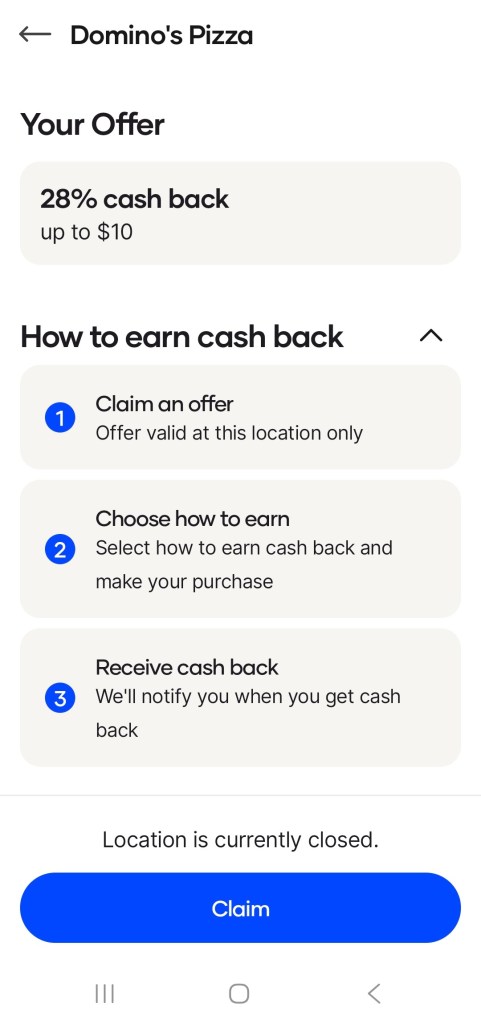
    Below is a screenshot of a cash back offer from a Domino’s Pizza close to where I live. This one has a super high 28% cash back offer “up to $10.” If I was in the mood for some Domino’s, this would be a really nice offer to claim!

    Once you build up a nice cash balance in the app, you can cash out to your bank account or a number of digital gift cards. Currently, I have $34 in my Upside account and I don’t think I will cash out until I make it to $50 or more.

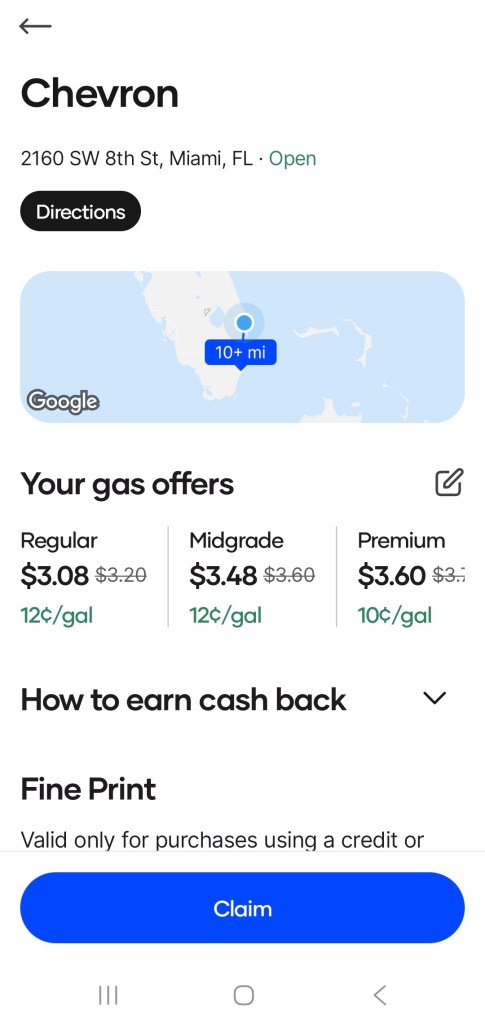
    Another example that I want to mention which is an easy cash back opportunity in the Upside app is purchasing gas. You have to get gas for your vehicle anyways, so why not receive some extra cash back on your fill up? Select the “Gas” category in the app and see what gas stations near you are participating in Upside. In the app screenshot below, you can see that this gas station offers 10-12 cents cash back per gallon.

    If you are also using a cash back credit card to pay for the gas, you are doubling up on your cash back earnings! This is a great way to stack some additional cash on your frequent gas purchases. Be intentional and organized with your spending so that you can save more money for you and your family. I think the Upside app is good opportunity to build up your cash back savings on everyday purchases.